
What led you into design?
Growing up, I was always fascinated by how technology could change our daily lives. I initially thought the only way to understand it was to learn the hardware, which led me to a degree in Electronics and Communication Engineering. I spent my time obsessed with the 'how' and the technical logic of systems.
But the deeper I got into the tech, the more I found myself looking past the screens toward the people on the other side. I became more interested in the 'why', the human element that makes technology actually matter. That curiosity eventually pulled me to Indiana University for my Master’s in HCI. Between classes, internships, and late-night hackathons, things clicked. Design wasn't just about what meets the eye; it was where systems thinking and empathy come together.
Today, I’m a Design Lead on the Ads team at Netflix. It’s a fascinating space where I get to use that original technical curiosity to help build the next generation of software experiences. I’ve essentially traded calculating circuit voltages for designing systems that millions of people use, and honestly, solving for human behavior is the most rewarding challenge I've taken on.
What does a typical day look like?
My day starts at 7:00 AM, fueled by a very non-negotiable hot cup of chai. I’m a huge believer in the power of writing goals and having a physical to-do list; there’s something about scratching off a task that feels like a tiny victory to start the day. I usually spend the next hour catching up on emails, slack messages, and some industry news.
At Netflix, the culture is very flexible. It’s one of the few places that still has a hybrid working model, so I’ll head into the office a few times a week to hang out and brainstorm with my colleagues. There’s a certain magic in a whiteboard session that you just can’t replicate over a screen.
As for the actual work? It’s a bit of a spectrum. On any given Tuesday, I might be wearing my 'visionary' hat, designing workflows for the operations team, or doing some vibe coding to see how a new feature actually feels in my hands. Then, an hour later, I’m switching gears to translate that vision into a high-stakes presentation for our executives, or diving into the weeds with our engineers to make sure every pixel is technically feasible.
By the time I close my laptop, the goal is to have crossed off everything on that morning list - or at the very least, to have found a more interesting problem to solve tomorrow.
What's your workstation setup?


Where do you go to get inspired?
I’m a huge fan of Sci-Fi and Anime, not just for the escapism, but for the world-building. When you watch something like Ghost in the Shell or Interstellar, you aren’t just looking at cool visuals; you’re looking at a vision of how complex human emotions and motivations collide.
Also living in the Bay Area, I make it a point to get away from the glow of the monitor as much as possible. When I’m not working, I’m usually out in nature with my camera. Whether it’s a last-minute road trip or a quiet moment on a trail, capturing a specific mood helps me bring a more narrative perspective back to my product work.
For online articles and podcasts, I usually go to:
Newsletters:
Julie Zhuo's The Looking Glass
The UX Collective
Deb Liu
UX Design Weekly
YouTube/Podcasts:
Lenny's Podcast
High Resolution
Dive Club
My First Million
What product have you recently seen that made you think this is great design?
Lately, I’ve been fascinated by NotebookLM. Working on enterprise tools, I’m used to dense, complex information, and NotebookLM is the first AI product that actually feels like a thought partner rather than just a search bar. The design is a clear evolution of the chat interface and matches how people actually want to interact with their own notes.
It solves the trust gap found in most AI tools by giving the user total agency over their data. It’s rare to see such a powerful technical engine presented through a UI that feels this calm and intentional. The ability to export insights as an audio podcast is especially impressive


What pieces of work are you most proud of?
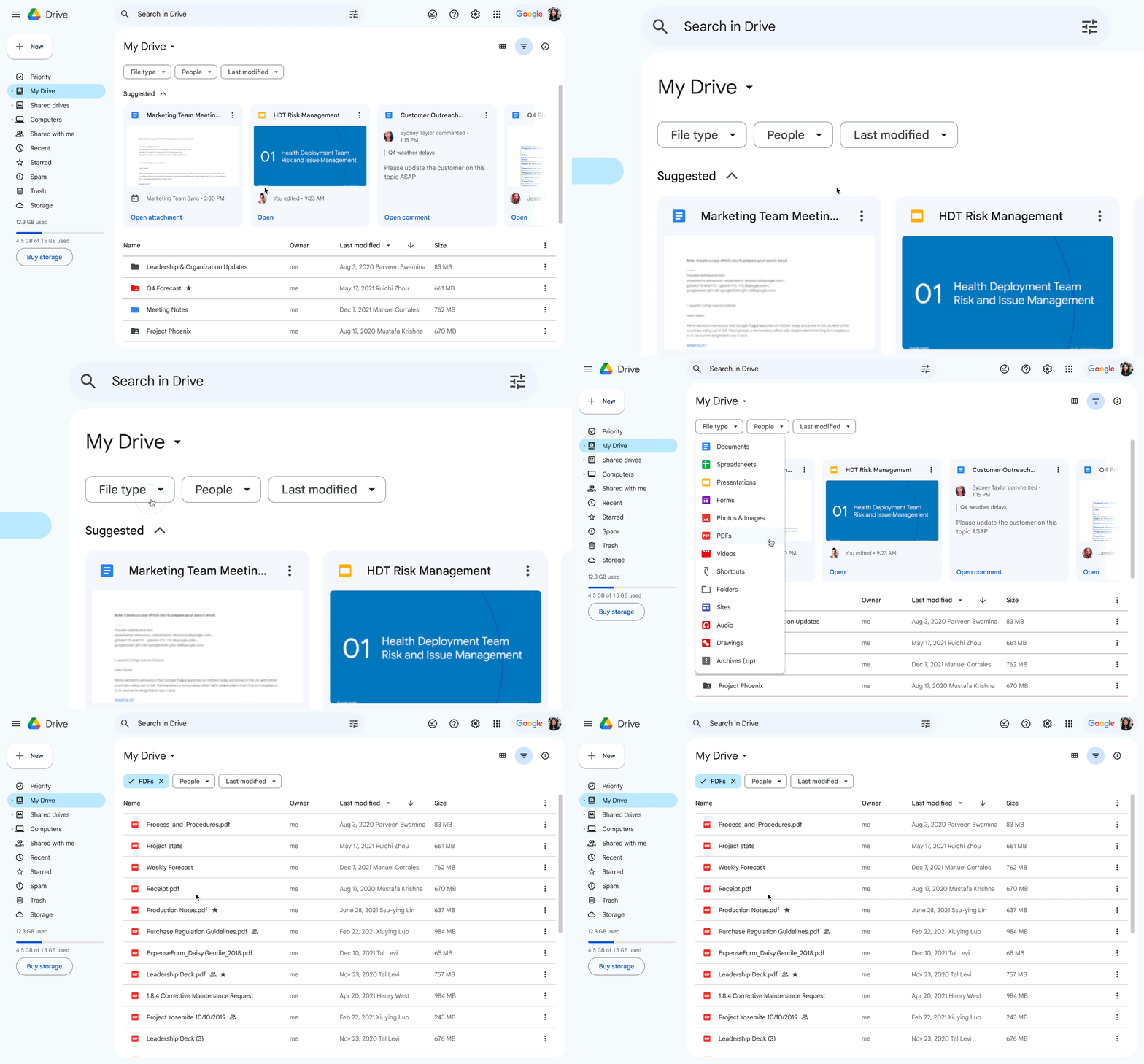
I was part of the Meet intelligence workstream at Google Workspace, where we focused on elevating the hybrid meeting experience using real-time speech transcription & translation platform augmented with AI & machine learning.
I joined the team in early 2021, and over the next two years, we launched several new features to make Meet more inclusive and productive. Our goal was to bridge the gap between communication and collaboration and grow subscription revenue through customer acquisition.
I’m most proud of two specific projects: Translated Captions, which broke down language barriers in real time, and Meeting Transcripts, which automated documentation by saving discussions directly into editable Google Docs.

What design challenges do you face at your company?
Netflix's ads platform is a web of interconnected workflows, and a change in one place can ripple through five others. Our team is also growing and shipping fast, so there's real pressure to move. But there's an equal need for design quality and coherence across the platform. Building the intuition for when to hold the line on craft and when to ship something imperfect is one of the hardest skills to develop. And as a senior designer, you're not just making that call for your own work. You're setting the bar for the rest of the team. Get it wrong in either direction, and you either slow everyone down or pile up design debt that's painful to unwind later.
What music do you listen to while designing?
Any advice for ambitious designers?
Most designers jump to screens too fast. Spend more time sitting with the problem. Understanding how your company makes money, what your team is measured on, and what keeps your leadership team up at night will make your design work sharper. Context isn't a distraction from design. It's what makes design useful.
Anything you want to promote or plug?
Related Interview


